
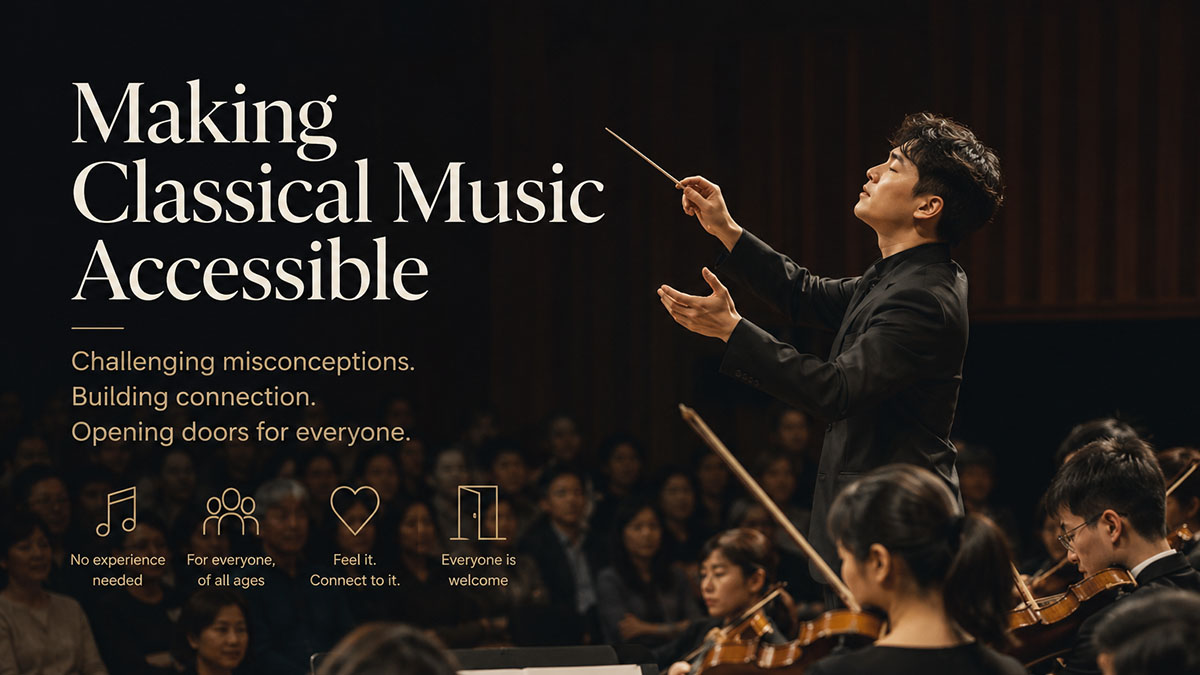
For many people, classical music carries a certain reputation.
It is often perceived as formal, intimidating, exclusive, or even difficult to understand. Some assume it is only for musicians, music students, or those with years of experience attending concerts.
Yet these perceptions often create barriers that prevent people from discovering something they might genuinely enjoy.
The reality is that classical music is far more accessible than many people realise. Like any form of music, it is ultimately about emotion, storytelling, creativity, and human connection.
Perhaps the challenge is not the music itself, but the misconceptions surrounding it.
Misconception #1: You Need Musical Knowledge to Enjoy Classical Music
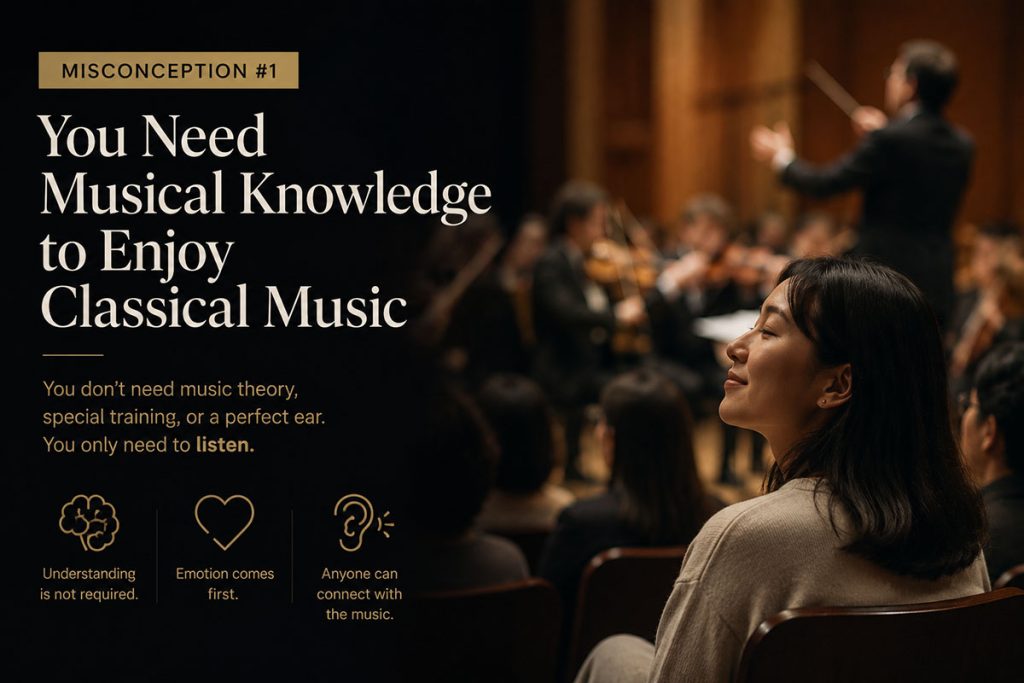
One of the most common misconceptions is that audiences need to understand music theory, recognise composers, or have some form of musical training before attending a concert.
In reality, most people connect with music emotionally long before they understand it intellectually.
Nobody expects audiences to understand cinematography before watching a film. Similarly, people do not need technical knowledge of harmony, orchestration, or musical form to appreciate a live performance.
The emotional experience comes first.
Whether a piece feels joyful, dramatic, nostalgic, exciting, or moving is something audiences can experience naturally.
Misconception #2: Classical Music Is Only for Older Audiences
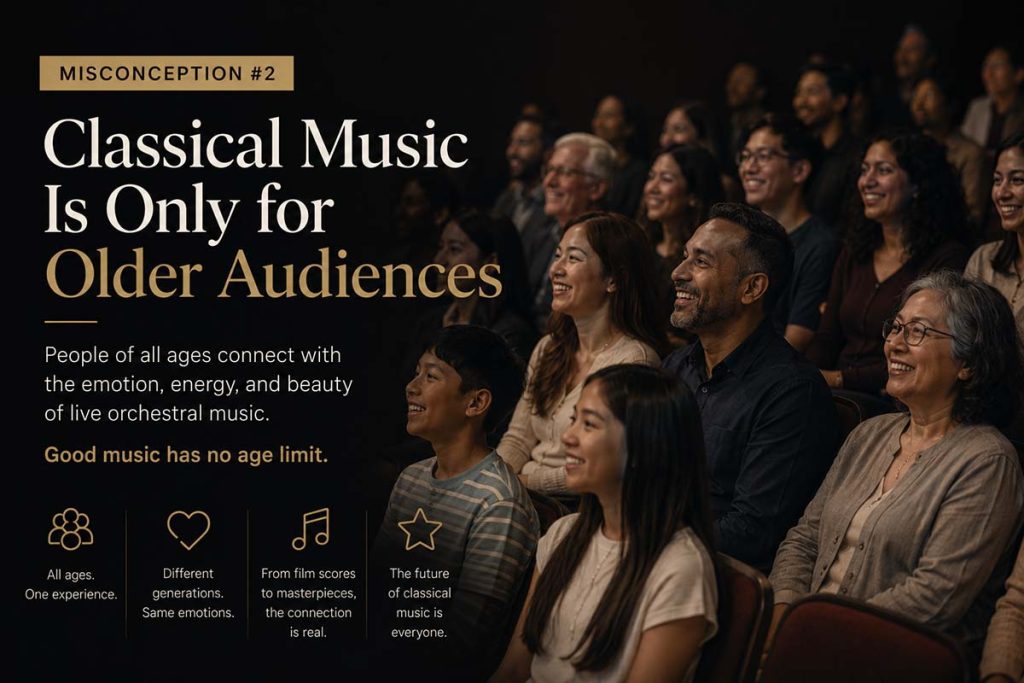
Another common assumption is that classical music primarily appeals to older generations.
However, younger audiences today are discovering orchestral music through many different avenues:
- Film scores
- Gaming soundtracks
- Streaming platforms
- Social media
- Live cultural experiences
Many people who enjoy the music of composers such as John Williams, Hans Zimmer, Joe Hisaishi, or Howard Shore are already emotionally connected to orchestral sound.
They may simply not think of that connection as “classical music.”
As orchestras continue evolving their programming and presentation, younger audiences are increasingly finding their place within the orchestral world.
Misconception #3: Classical Music Is Boring
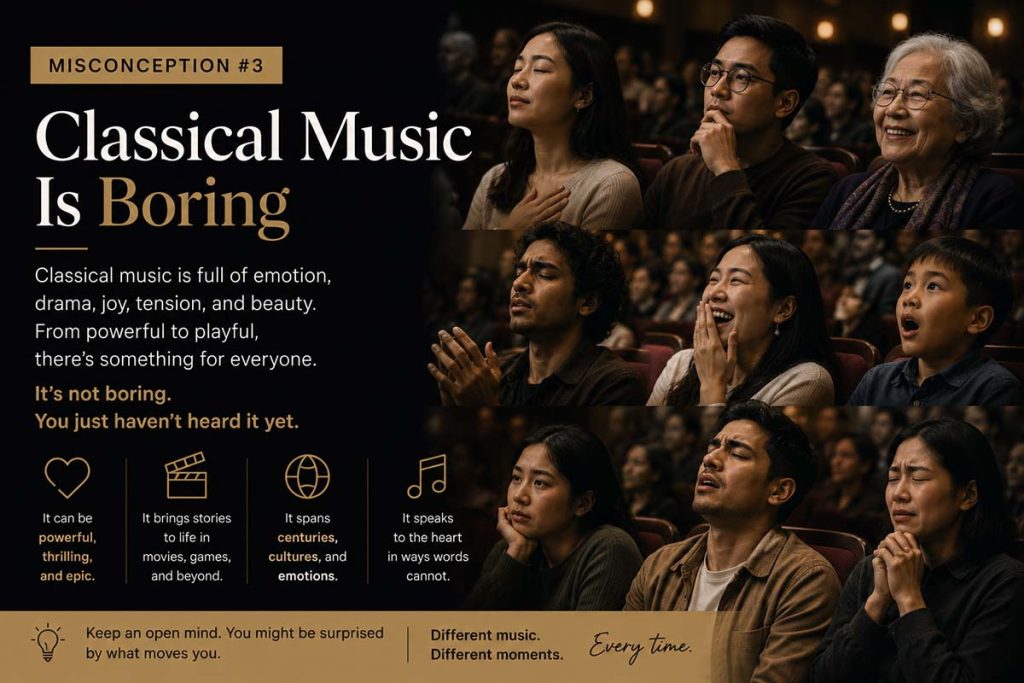
Perhaps no misconception is more persistent.
Yet classical music encompasses an enormous range of emotions and experiences.
Some works are powerful and dramatic.
Some are intimate and reflective.
Some are thrilling, energetic, and cinematic.
Classical music has inspired some of the most iconic film scores ever written precisely because orchestral music is capable of expressing such a wide range of human emotions.
The diversity within the repertoire often surprises first-time listeners.
Misconception #4: Concert Halls Are Only for Certain People
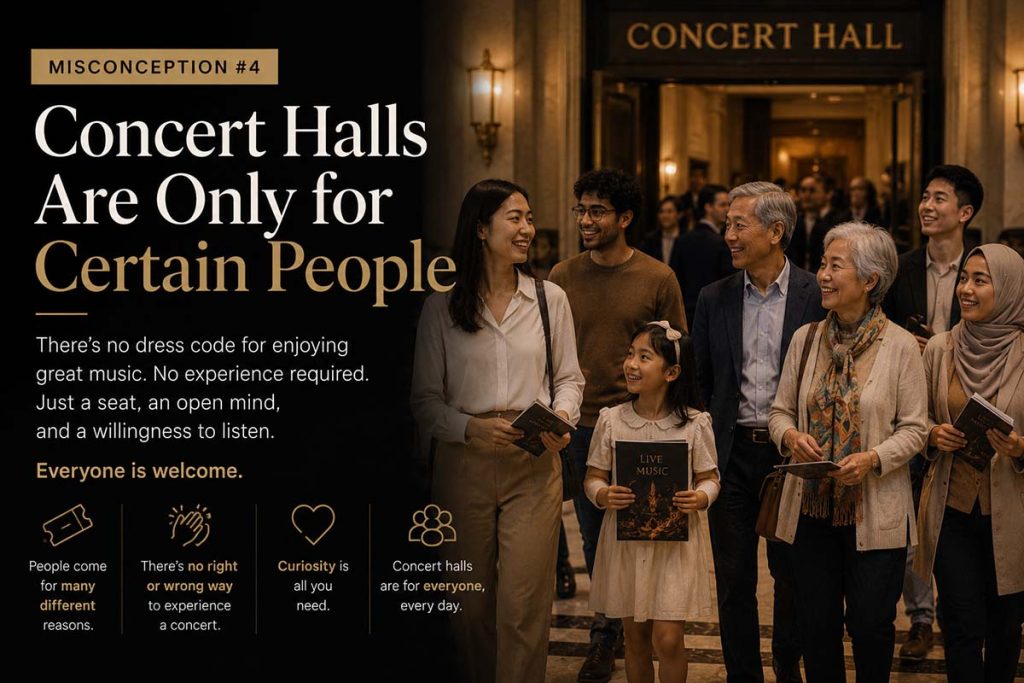
Many people worry about attending their first classical concert because they fear they will not know the “rules.”
Questions such as:
- What should I wear?
- When do I clap?
- What if I don’t understand the music?
are incredibly common.
The truth is that concert halls are spaces for everyone.
Audiences attend for different reasons:
- to relax
- to be inspired
- to experience live music
- to spend time with family and friends
- to discover something new
There is no requirement to be an expert.
Curiosity is enough.
Misconception #5: Classical Music Belongs to the Past
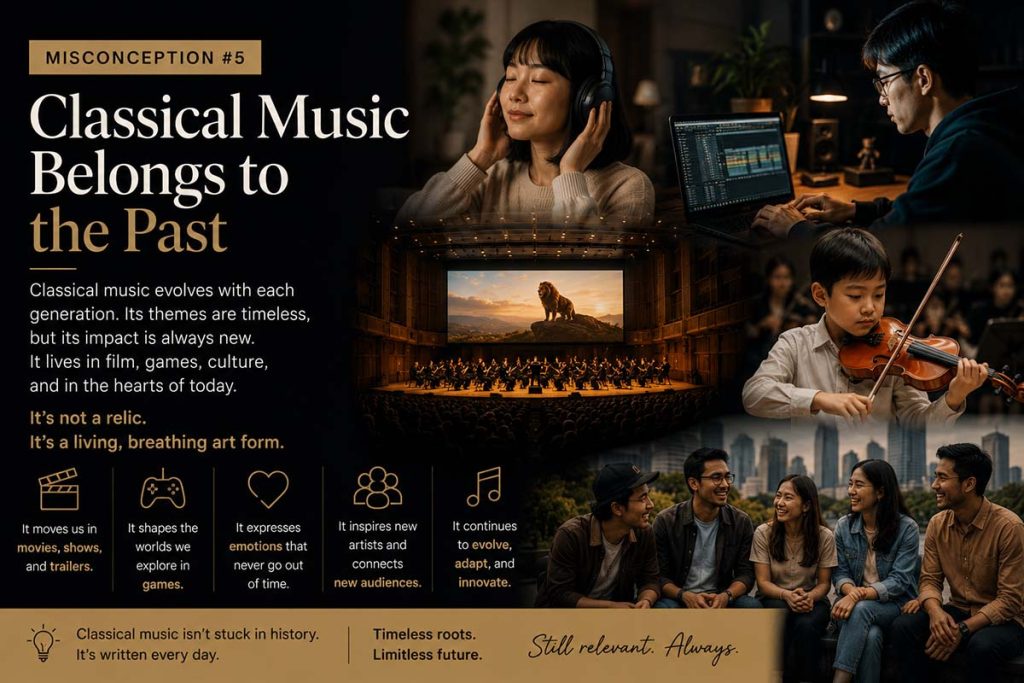
Classical music is often associated with history, tradition, and composers from centuries ago.
While its roots are certainly historical, its relevance remains contemporary.
The themes explored in orchestral music are timeless:
- love
- loss
- hope
- struggle
- triumph
- wonder
These emotions remain as relevant today as they were hundreds of years ago.
Modern audiences continue connecting with classical music because human experiences have not changed nearly as much as technology has.
The music survives because the emotions survive.
Accessibility Is About More Than Ticket Prices
When people discuss accessibility in the arts, the conversation often focuses on affordability.
While affordability is important, accessibility is also about perception.
It is about creating environments where people feel welcome.
It is about helping audiences understand that they do not need prior knowledge to participate.
It is about removing the idea that classical music belongs only to certain groups of people.
The arts thrive when audiences feel invited, not intimidated.
The Future of Classical Music
The future of classical music depends not only on preserving tradition but also on helping new audiences discover meaningful connections with it.
That does not mean changing the music.
It means changing how people experience it.
Through education, storytelling, outreach, community engagement, and welcoming concert experiences, orchestras around the world are helping audiences realise that classical music is not something distant or exclusive.
It is simply another way of telling human stories through sound.
Final Thoughts
Classical music was never meant to be intimidating.
At its heart, it is an art form built on emotion, creativity, and connection.
You do not need to know every composer.
You do not need to understand music theory.
You do not need years of concert-going experience.
You only need to be willing to listen.
And perhaps that is where every musical journey begins.

