
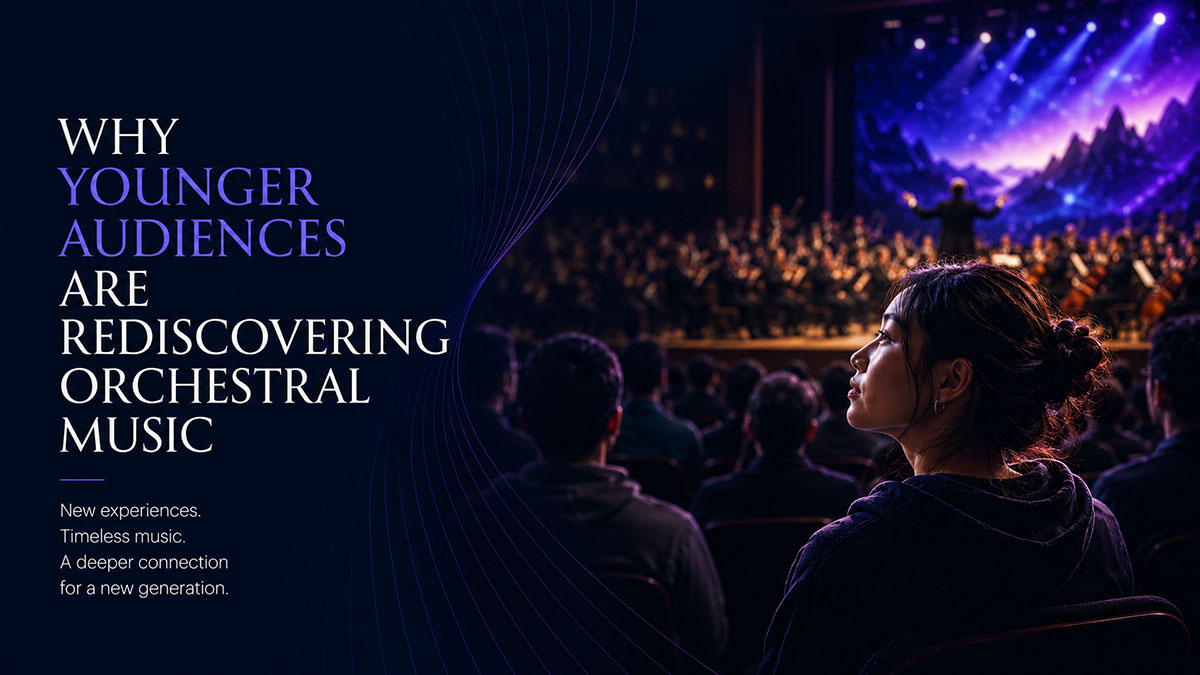
For a long time, orchestral music was often seen as something traditional, formal, or reserved for older audiences.
But that perception is changing.
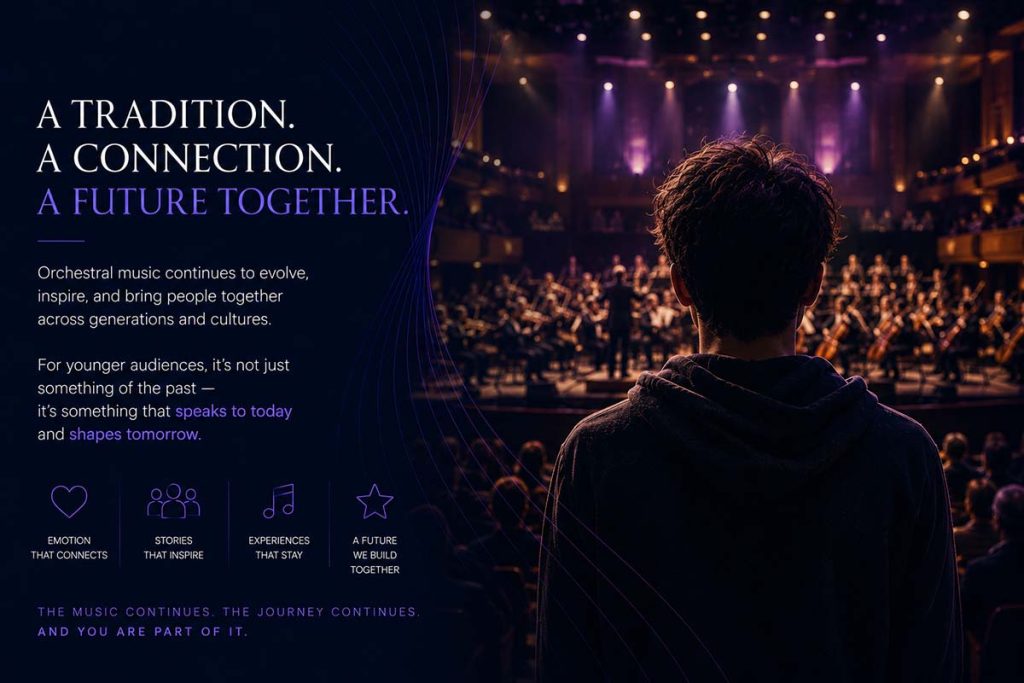
Today, younger audiences are finding their way back to orchestral music, sometimes through concert halls, but often through films, games, streaming platforms, social media, and live cultural experiences.
They may not always call it “orchestral music” at first.
But they recognise the feeling.
The swell of strings during an emotional scene.
The brass that makes a hero’s entrance feel larger than life.
The percussion that turns tension into adrenaline.
The melody that stays in your mind long after the moment has passed.
For many younger listeners, orchestral music has never truly disappeared. It has simply been rediscovered in new ways.
Orchestral Music Already Lives in Modern Culture
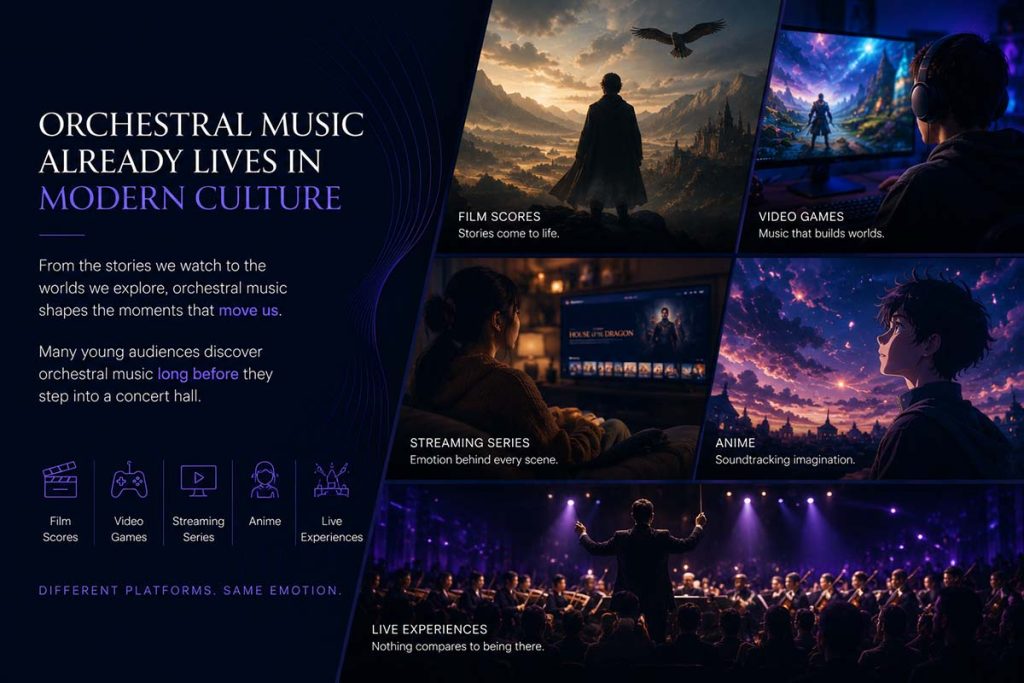
Many young audiences encounter orchestral music long before they attend an orchestra concert.
They hear it in:
- film scores
- video game soundtracks
- anime
- trailers
- streaming shows
- live cinematic concerts
- social media edits
This matters because orchestral music has become closely tied to emotional storytelling.
When audiences watch a film, play a game, or experience a dramatic scene, music often shapes how they feel before they even realise it.
That first emotional connection can become a doorway into a wider appreciation of orchestral sound.
For some, the journey into orchestral music does not begin with Beethoven or Mahler.
It begins with a movie theatre, a game console, or a soundtrack that made them feel something deeply.
Film Scores Became a Gateway
Film music has played a major role in introducing younger audiences to orchestral music.
Many people who do not consider themselves classical music listeners still have favourite soundtracks.
They know what it feels like when music creates wonder, fear, nostalgia, hope, or heartbreak.
That emotional familiarity makes orchestral music feel less distant.
Film scores have helped audiences understand that orchestral music is not just historical. It can be cinematic, immediate, and emotionally powerful.
For many younger audiences, the orchestra first became familiar through storytelling.
Gaming Has Expanded the Sound of Orchestra
Video games have also helped reshape how younger audiences experience orchestral music.
Game soundtracks often use orchestral sound to create entire worlds.
Music helps players feel:
- adventure
- danger
- mystery
- victory
- sadness
- discovery
Unlike passive listening, gaming allows audiences to experience music while actively participating in a story.
This creates a powerful connection between sound, emotion, and memory.
For many younger listeners, orchestral music is not something distant or formal. It is the sound of worlds they have explored, characters they have loved, and moments they remember.
Younger Audiences Want Experiences That Feel Real
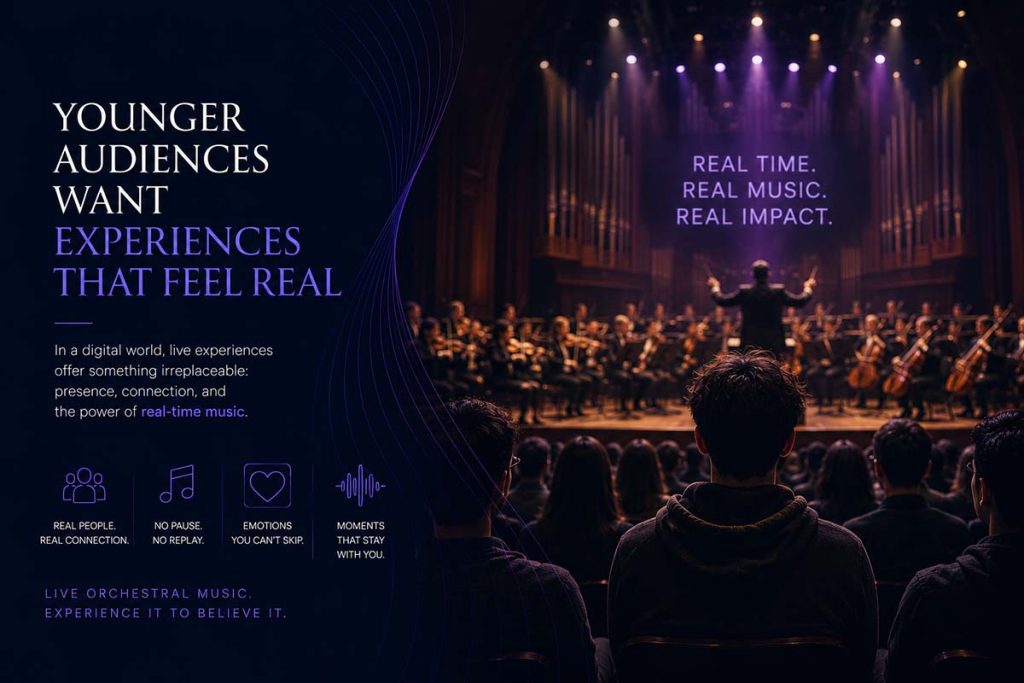
In a digital world, much of daily life happens through screens.
Music is streamed.
Entertainment is algorithm-driven.
Content is consumed quickly.
Because of this, live experiences have become more meaningful.
A live orchestra offers something different.
It asks audiences to be present.
There is no pause button.
No replay.
No scrolling away.
The music happens in real time, in the same room as the audience, created by real people performing together.
That sense of presence is one reason younger audiences are drawn to live orchestral experiences.
It feels human.
Orchestral Music Offers Emotional Depth
Younger audiences are often searching for experiences that feel emotionally meaningful.
Orchestral music naturally offers that depth.
It can be overwhelming, intimate, dramatic, calming, thrilling, or reflective.
It does not always need lyrics to communicate emotion.
Sometimes, that is exactly what makes it powerful.
Music without words gives audiences space to interpret their own feelings. It allows listeners to connect personally, without being told exactly what to think or feel.
For a generation surrounded by constant noise, orchestral music can offer emotional clarity.
Classical Spaces Are Becoming More Accessible
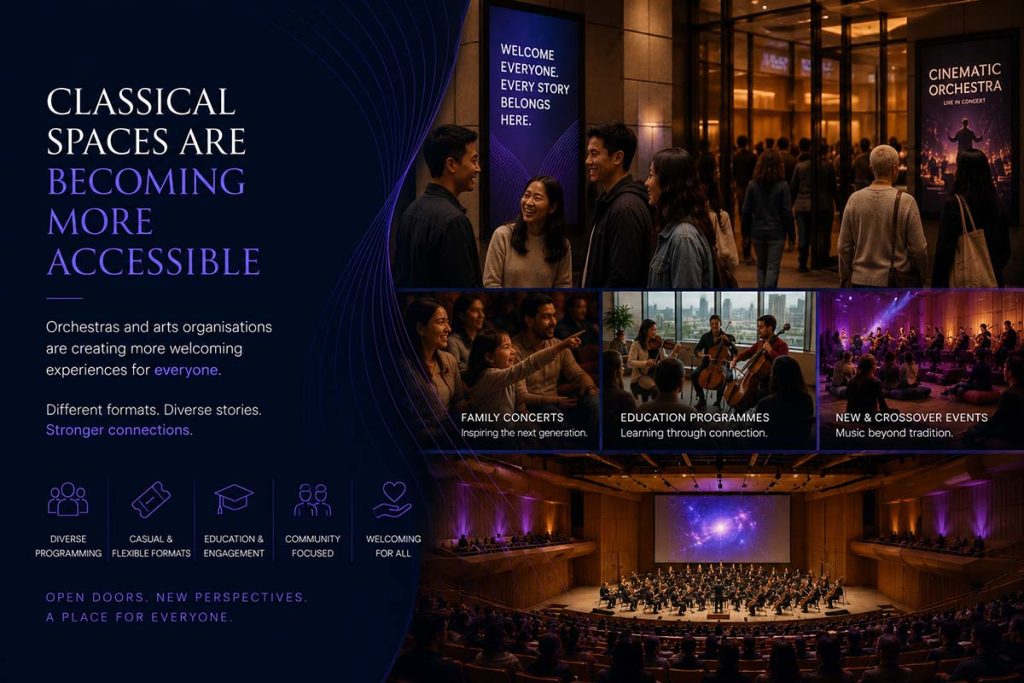
Another reason younger audiences are reconnecting with orchestral music is that the way it is presented is changing.
Orchestras and arts organisations are increasingly finding ways to make performances feel more welcoming, relatable, and accessible.
This includes:
- more diverse programming
- film score concerts
- family-friendly performances
- educational content
- casual concert formats
- social media storytelling
- collaborations across genres
The music itself does not need to be simplified.
But the experience surrounding it can become more open.
When audiences feel welcomed rather than intimidated, they are more willing to explore.
Orchestral Music Is Not Just About the Past
One misconception is that orchestral music belongs only to history.
But orchestral music continues to evolve.
New works are being written.
Film scores are being performed live.
Gaming music is entering concert halls.
Contemporary composers are creating new orchestral languages.
The orchestra remains one of the most powerful tools for emotional storytelling.
Its roots may be traditional, but its relevance is still very much alive.
Younger audiences are not necessarily rejecting tradition. They are discovering how that tradition connects to the stories, emotions, and experiences they already care about.
Rediscovery Begins With Emotion
Perhaps the most important reason younger audiences are rediscovering orchestral music is simple:
They are finding emotion in it.
Not because they have been told it is important.
Not because they know every composer.
Not because they understand every musical structure.
But because something in the sound connects with them.
That connection may begin with a film.
A game.
A concert.
A single melody.
A moment they cannot forget.
And once that emotional connection happens, orchestral music starts to feel less distant.
It starts to feel familiar.
Final Thoughts
Younger audiences are not rediscovering orchestral music because it has suddenly become trendy.
They are rediscovering it because it continues to speak to something human.
It gives emotion scale.
It gives stories depth.
It turns sound into atmosphere.
It creates moments that feel bigger than everyday life.
For many younger listeners, orchestral music was never truly out of reach.
It was already there in the films they loved, the games they played, the stories they remembered, and the emotions that stayed with them.
Now, more of them are finding their way from the screen to the stage.
And that may be one of the most exciting signs for the future of orchestral music.

