

Ask ten people what classical music is, and you may receive ten different answers.
Some will immediately think of Mozart, Beethoven, or Tchaikovsky. Others may picture a grand concert hall, a full orchestra, or musicians dressed in formal black attire. For younger audiences, the first connection might not be a composer at all, but a film score, a video game soundtrack, or a memorable live performance.
So what is classical music, really?
The answer is both simpler and more complex than many people realise.
A Term That Means Different Things
The phrase “classical music” is often used as a catch-all term for orchestral and concert music. However, from a historical perspective, Classical Music with a capital “C” actually refers to a specific period in Western music history, roughly between 1750 and 1820.
This was the era of composers such as:
- Mozart
- Haydn
- Beethoven (early works)
Yet when most people say “classical music” today, they are usually referring to a much broader tradition that spans centuries.
That tradition includes:
- Baroque music
- Classical-era music
- Romantic music
- Contemporary orchestral works
- Chamber music
- Choral music
- Symphonic music
In everyday conversation, classical music has become a convenient way of describing a rich and diverse musical tradition.
More Than A Genre

One reason classical music can be difficult to define is because it is not a genre in the same way pop, rock, jazz, or hip-hop are genres.
It is better understood as a tradition.
Within classical music, there are countless styles, influences, and musical languages.
Some works are:
- dramatic
- intimate
- joyful
- playful
- experimental
- cinematic
- reflective
A listener could spend a lifetime exploring classical music and still discover something new.
That diversity is one of its greatest strengths.
Why Do People Find It Intimidating?
For many people, the challenge is not the music itself.
It is the perception surrounding it.
Common misconceptions include:
- You need musical training to understand it.
- It is only for older audiences.
- It is boring.
- Concert halls are exclusive spaces.
- Classical music belongs to the past.
The reality is often very different.
Most people connect with music emotionally before they understand it intellectually.
Nobody expects audiences to study filmmaking before enjoying a movie. In the same way, listeners do not need to understand harmony, orchestration, or music theory to appreciate a live performance.
Music is first and foremost an emotional experience.
Classical Music Is Closer Than You Think
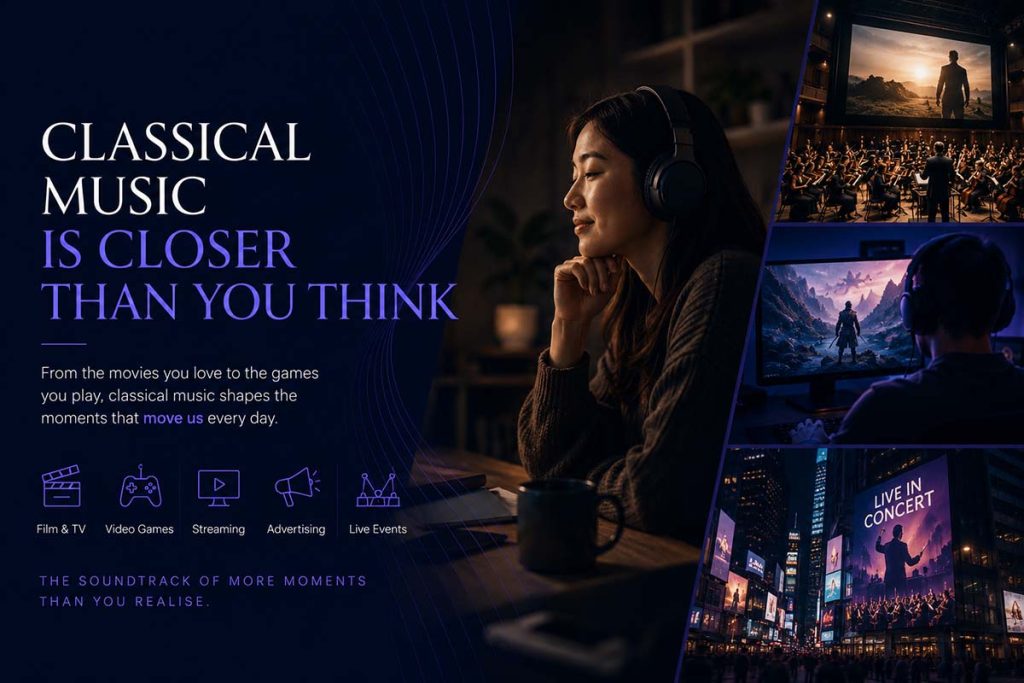
Many people who claim not to listen to classical music are often surrounded by it.
Orchestral music plays a significant role in:
- films
- television
- video games
- documentaries
- live events
The emotional power of a film score often comes from the orchestra.
When audiences feel:
- excitement
- suspense
- wonder
- sadness
- triumph
they are frequently responding to orchestral music.
For many younger audiences, film scores have become their first introduction to the sound of an orchestra.
In that sense, classical music is often much closer to everyday life than people realise.
A Living Tradition
One misconception worth challenging is the idea that classical music belongs exclusively to history.
While its roots stretch back centuries, the tradition continues evolving today.
Composers continue writing new works.
Orchestras continue commissioning new music.
Musicians continue finding new ways to engage audiences.
Classical music is not frozen in time.
It continues adapting while remaining connected to its heritage.
Its themes remain timeless:
- love
- loss
- hope
- courage
- curiosity
- wonder
These are experiences that transcend generations.
What Matters Most
Perhaps the most important thing to understand about classical music is that there is no single “correct” way to experience it.
- Some people attend concerts regularly.
- Some discover orchestra through cinema.
- Some enjoy listening at home.
- Some are hearing it for the very first time.
All of those experiences are valid.
- You do not need to know every composer.
- You do not need to understand music theory.
- You do not need to know when to clap.
You simply need to be willing to listen.
So, What Is Classical Music, Really?

It is history.
It is tradition.
It is storytelling.
It is emotion.
It is artistry passed from one generation to the next.
But perhaps most importantly, it is a living musical tradition that continues helping people connect with ideas, stories, and emotions that remain deeply human.
The music may have been written centuries ago.
The feelings it creates are as relevant as ever.

