
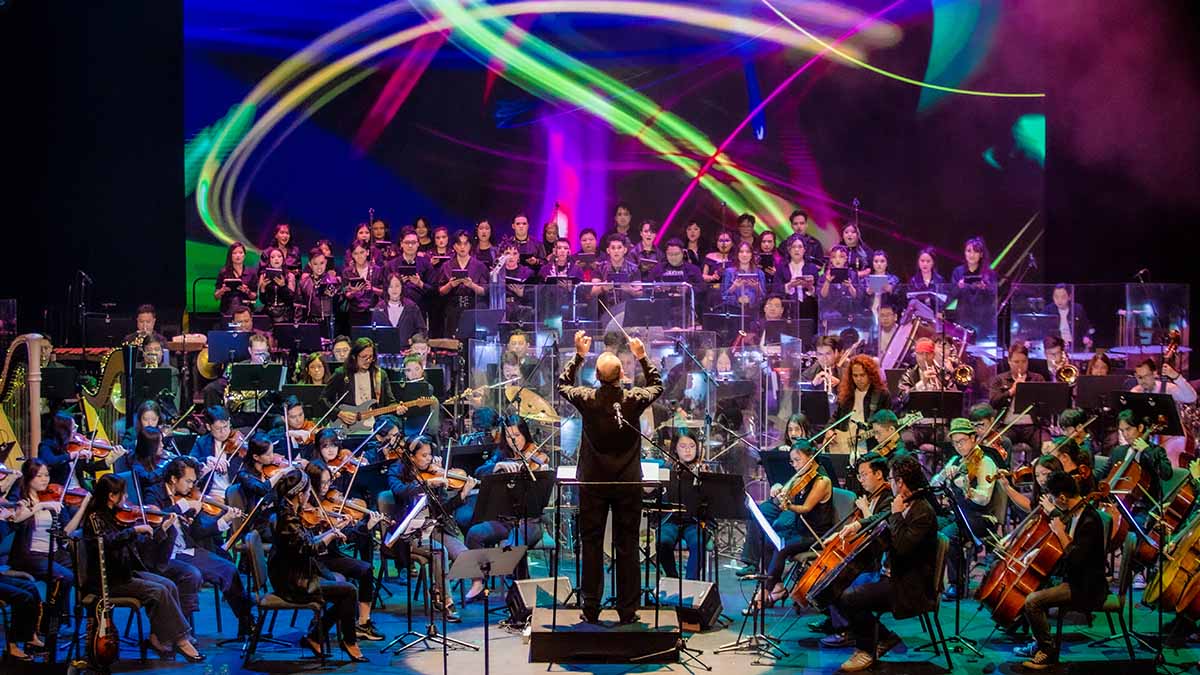
In an age of instant streaming, endless playlists, and algorithm-driven entertainment, live music remains one of the few experiences that cannot be fully replicated through a screen.
Music today is more accessible than ever. We can listen anywhere, anytime, on demand.
Yet people still travel across cities, queue outside venues, sit together in dark concert halls, and experience music live.
Why?
Because live music offers something that modern life increasingly struggles to provide: human connection.
Live Music Creates Presence
Much of modern life is consumed passively.
We scroll while listening.
We multitask while watching.
We consume content while distracted.
Live music asks something different from us.
It asks us to be present.
Inside a concert hall, audience members are not simply consuming background entertainment. They are fully experiencing a moment in real time alongside performers and other listeners.
For a brief period, attention becomes focused.
Phones disappear.
The outside world quiets down.
And that shared presence changes how people experience emotion.
Shared Experiences Matter More Than Ever
Modern entertainment has become increasingly individualised.
Algorithms personalise what we watch.
Streaming platforms personalise what we hear.
Social media personalises what we see.
But live music remains collective.
Hundreds or even thousands of people gather to experience the same performance together at the same moment.
That sense of collective emotion is powerful:
- applause spreading through a room
- silence before a performance begins
- audiences reacting together instinctively
- emotional climaxes felt simultaneously
Live music reminds people what shared human experiences feel like.
And perhaps that is part of why audiences continue seeking it out.
Live Music Feels Human
Recorded music can sound technically perfect.
But live performance carries something different:
imperfection, spontaneity, risk, and emotion.
Performers react in real time.
Energy shifts throughout the performance.
Moments unfold unpredictably.
That human element makes live music feel alive.
Audiences are not just hearing music. They are witnessing people creating something together in front of them.
And in an increasingly digital world, that authenticity feels valuable.
Music Has Always Brought People Together
Long before streaming platforms existed, music functioned as a communal experience.
People gathered:
- in theatres
- in concert halls
- in public spaces
- in communities
- in celebration
- in grief
Music has always helped people process emotion collectively.
That emotional role has not disappeared.
If anything, it may matter even more today.
Younger Audiences Are Rediscovering Live Experiences
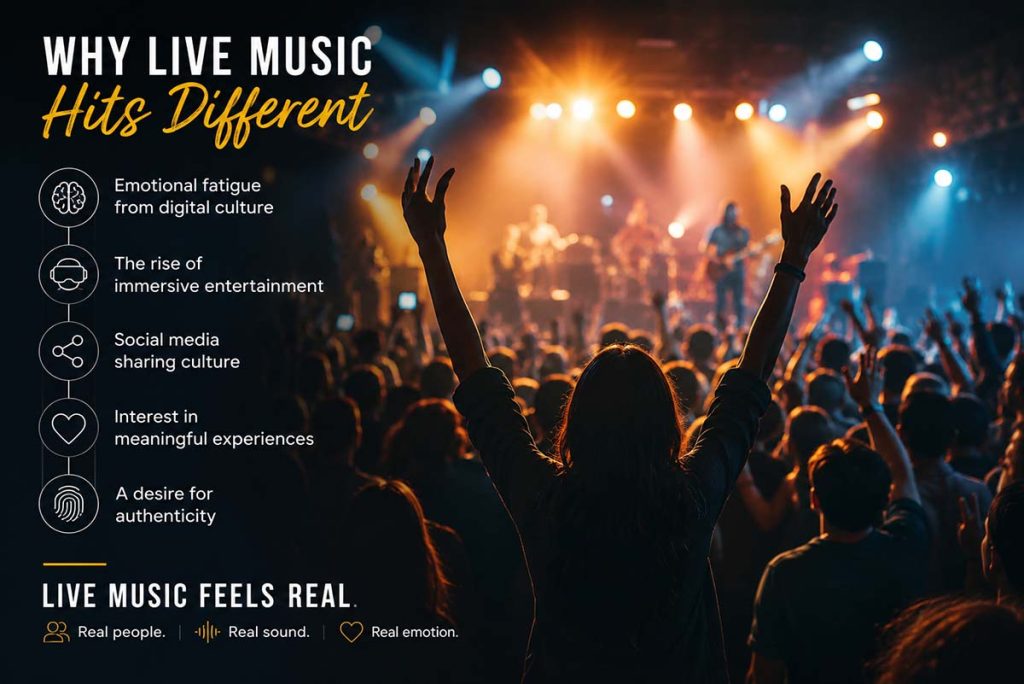
Interestingly, younger audiences are increasingly valuing live experiences again.
Part of this comes from:
- emotional fatigue from digital culture
- the rise of immersive entertainment
- social media sharing culture
- interest in meaningful experiences
- a desire for authenticity
But another reason may be simpler: live music feels real.
Not curated.
Not filtered.
Not edited.
Real people.
Real sound.
Real emotion.
That authenticity resonates strongly in today’s environment.
Live Music Creates Memory
There is also something deeply memorable about live performance.
People may forget:
- playlists
- background songs
- casual listening sessions
But they often remember:
- the concert they attended years ago
- the atmosphere in the room
- the silence before the first note
- the emotional reaction they felt during a performance
Live music becomes attached to memory because it is experienced physically, emotionally, and socially all at once.
It becomes more than content.
It becomes a moment.
Why Live Music Still Matters Today
Technology will continue evolving. Streaming will continue growing. Entertainment will continue becoming more accessible.
But live music continues offering something increasingly rare: genuine human connection.
It creates:
- presence
- emotional immersion
- collective experience
- atmosphere
- memory
- cultural connection
Perhaps that is why live music continues surviving across generations and technological change.
Not because people reject technology, but because some experiences are simply more meaningful when shared in person.
Final Thoughts
Live music matters because it reminds people how it feels to experience something together.
In a world designed for convenience and speed, live performance asks audiences to slow down, listen closely, and become fully present.
And maybe that feeling is more important now than ever before.

